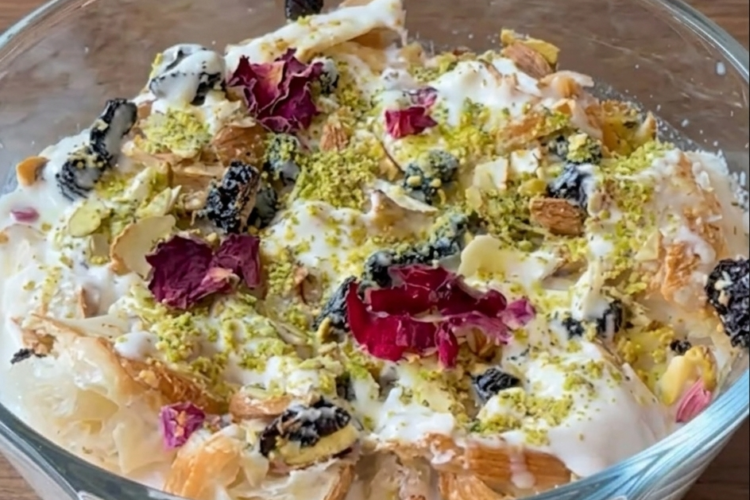
There is something about Ramzan that makes certain foods taste different. Maybe it’s the hour — that particular quality of hunger after a long day of fasting. Maybe it’s the table full of people, the low evening light, the sense of occasion. Whatever it is, Umm Ali belongs to this season completely. The moment you pull that bubbling, golden dish out of the oven — flaky pastry drowning in sweetened milk, pistachios catching the heat, the whole kitchen smelling like a warm hug — you will want to eat it straight from the pan, without sharing.
Known across the Arab world as Om Ali, Oumm Ali, or Omali, this is Egypt’s national dessert — a dish so woven into the country’s identity that it shows up at weddings, celebrations, and Ramzan Iftars alike. And it has a story. A wild, scandalous, 13th century palace story involving a queen, a murder, and a very pointed act of celebration.
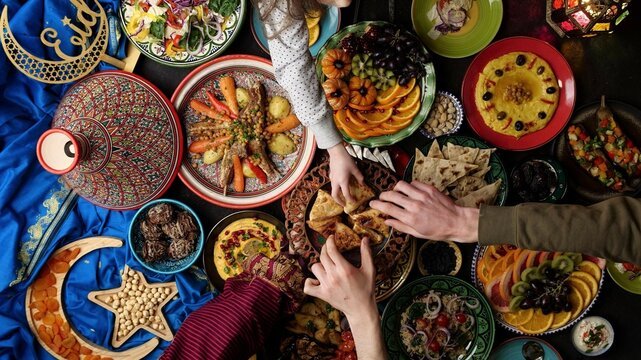
A Little History Before We Cook
In 1257, Egypt had a queen — Shajar al-Durr — who had concealed her husband’s death, helped defeat the Crusaders, and briefly ruled the country in her own name. When political pressure forced her into a marriage with the new Sultan Aybak, he already had a first wife: a woman known simply as Umm Ali, “Mother of Ali.”
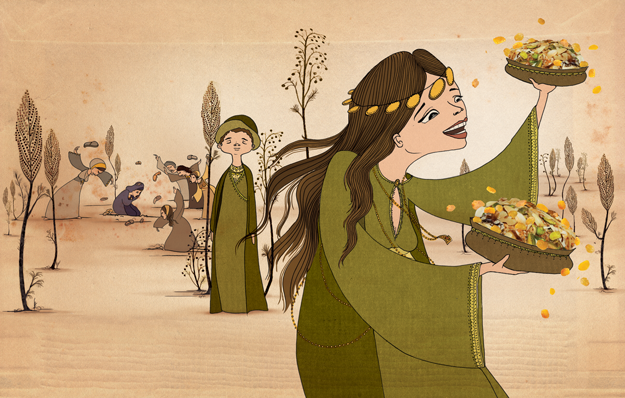
Things went badly. Aybak announced plans for yet another marriage, and Shajar al-Durr responded by having him murdered. She was captured, and in an act of retribution, killed by Umm Ali’s household. Triumphant, Umm Ali ordered her cooks to make the most spectacular dessert the palace had ever seen, distributed it across Egypt with a gold coin placed in every bowl, and the people cheered and called it after her.
As for what the palace cooks actually made that day — folklore suggests it was far simpler than the layered, creamy version we know today. The story goes that they grabbed whatever was in the kitchen: day-old flatbread, warm milk, a drizzle of honey, and a handful of nuts. No puff pastry, no croissants, no cream. Just humble pantry staples, soaked together and baked until golden. The kind of thing you make when you’re told to celebrate immediately and the shops aren’t open. Over centuries, the recipe dressed itself up — flatbread became puff pastry, honey gave way to sweetened milk and cream — but that original idea of transforming simple, leftover bread into something extraordinary has never really left.
Seven hundred years later, we’re still making it. Every Ramzan, at Iftar tables across Egypt and the wider Arab world, someone pulls a dish of Umm Ali out of the oven and the whole room leans in.
That’s the power of a good recipe — and an even better story. A dessert born of palace intrigue and political revenge has become, over seven centuries, a symbol of generosity, celebration, and the warmth of sharing food with people you love.
The Indian Kitchen Twist
Here’s the thing I find most charming about Umm Ali — if you grew up eating dudh-roti, you already know this dessert. Not the exact version, but the soul of it: bread softened in warm, sweetened milk, simple and deeply satisfying. Umm Ali is just that idea dressed up for a dinner party.
If croissants feel too fancy or you simply don’t have them on hand (honestly, who always has croissants?), puff pastry works beautifully. But my personal favourite shortcut is khari biscuits — those buttery, flaky ones from your local Irani café. They soak up the milk like they were designed for it and add a wonderful crunch that croissants sometimes don’t. It’s a very Indian solution to an ancient Egyptian recipe, and it works perfectly.
From Palace Kitchen to Yours
The recipe below is everything you need, with a few notes on swaps and make-ahead tips.


Umm Ali — Egyptian Bread Pudding
Ingredients
Method
Notes
- Condensed milk tip: Using condensed milk instead of just sugar makes a noticeable difference — richer, slightly caramel-y, more complex. Worth it.
- Khari biscuit swap: A very Indian substitution that works beautifully — buttery, flaky, soaks upmilk perfectly.
- Don’t delay serving: Umm Ali is best straight from the oven. As it cools it gets soggier — so time it to come out right before you’re ready to eat.
- Make ahead: Bake and break the pastry in advance. Make the milk mixture separately. Thirty minutes before serving, warm the milk, assemble, and bake fresh.
- Rose water vs vanilla: Rose water is the traditional Egyptian flavour — floral and fragrant. Vanilla is milder. Both are delicious; use what you love.
- Nut-free version: Skip the nuts and add extra coconut and raisins — still wonderful.
Ramzan Mubarak to everyone celebrating. 🌙 May your Iftars be warm, your tables full, and your desserts always worth the second helping.


Если вы хотите [url=https://www.dizaynerskiye-barnyye-stulya.ru/]барные стулья премиум класса[/url], наш магазин предлагает широкий выбор стильных и качественных моделей.
Кроме того, в некоторых магазинах доступны услуги по индивидуальному заказу.